Farkle Cards
- 4.9
- Rating
- 100.00K
- Installs
- Free
- Price
 Analysis by App-foxy
I enjoy card games most when they are easy to start but still give me a reason to think before making the next move. Farkle Cards takes that approach and turns the familiar Farkle idea into a card-focused game from FunCraft Games. It is free to download, aimed at Everyone, and available for Android devices running version 7.0 or later. After spending time with it, I found the appeal is less about spectacle and more about quick decisions, risk management, and the satisfying tension of deciding whether to stop or push your luck.
The game has already attracted a strong audience, with an average rating of 4.9 from around twelve thousand ratings and more than one hundred thousand installs. Those figures suggest that the simple format is connecting with players, but they do not tell the whole story. What matters in everyday use is how quickly a round gets going, whether the interface stays comfortable during repeated play, and whether the game remains enjoyable after the novelty of the first session fades. That is where this review focuses.
How Farkle Cards feels in everyday play
I find the appeal of Farkle Cards easiest to judge in the small moments: a spare minute, a phone in hand, and one decision that could protect a modest result or risk it for more. This section looks at how that focused rhythm fits into ordinary routines, including the value of choosing a natural stopping point before “one more turn” takes over.
You May Also Like

 Pandora - Music & Podcasts
Pandora’s Music Is Easy to Start, but Harder to Recover
Pandora’s strength is its low-effort path from a seed to a station. Its weak spot is how much confidence it asks you to place in connection, setup, and quiet recovery.

 AccuWeather: Weather Radar
AccuWeather Review: A Quick, Clear Forecast for Everyday Decisions
For everyday plans, the best forecast is the one you can understand quickly. AccuWeather makes rain timing, radar, and local conditions easy to act on, with a few trade-offs.

 Hill Climb Racing
Why Hill Climb Racing Still Turns Crashes Into One More Run
A tiny car, a bumpy hill and one more upgrade: Hill Climb Racing keeps resurfacing because its simple chaos makes every near-miss feel personal.

 AliExpress - Shopping App
AliExpress Makes Global Shopping Feel Personal, but Shoppers Bear the Risk
AliExpress turns a global marketplace into a pocket-sized discovery engine. Its reach is useful, its shopping loop compelling, and its trade-offs easy to miss.

 Lords Mobile: Kingdom Wars
Lords Mobile Is a Kingdom-Building Routine, Not a Quick Match
A case-by-case verdict on the building, battles, device demands, and social commitments that make Lords Mobile rewarding for some players and exhausting for others.

 PDF Scanner app - TapScanner
TapScanner Makes Paperwork Easier to Capture, Check, and Share
TapScanner makes scanning with a phone feel less like a rescue operation and more like a dependable step in getting work done. Its capture tools are useful, though not flawless.
More From Our News Desk
View All News


Quick rounds without a long learning curve
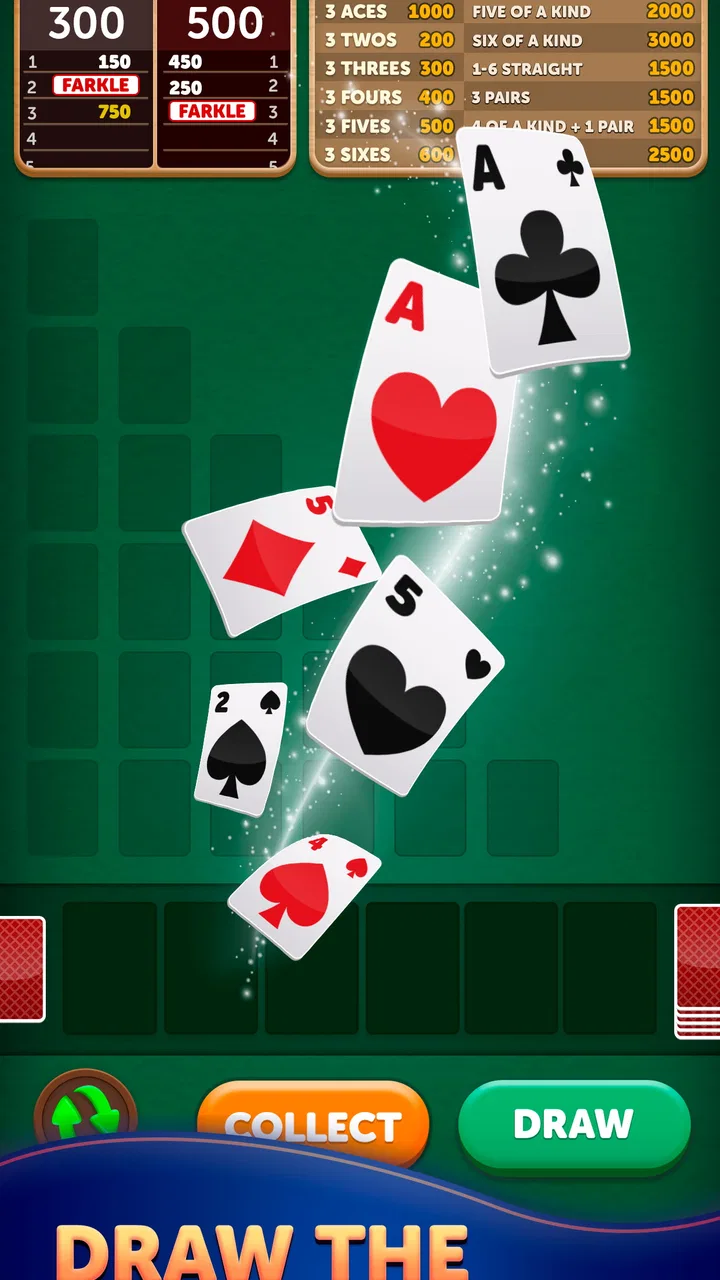
My first impression was that Farkle Cards is built for players who want to understand the basic rhythm quickly. The card-based presentation keeps the experience more approachable than a complicated strategy title, while the Farkle foundation gives each decision a little uncertainty. You are not simply selecting the obvious move every time; you are weighing the value of continuing against the possibility of losing a promising turn.
That makes it a natural fit for short breaks. I can imagine opening it while waiting for an appointment, taking a few turns during a commute, or playing a handful of rounds before bed. It does not demand the same uninterrupted attention as a long campaign or a competitive match with a large ruleset. The strongest use case is the small pocket of spare time where you want something interactive rather than passive scrolling.
The speed of a game like this is not only about loading. It is also about how quickly the player can read the current situation and make a decision. Farkle Cards benefits from keeping the central question clear: is the possible reward worth the risk? That clarity helps the game feel brisk even when I slow down to consider a safer choice.
Where the tension comes from
The most enjoyable moments are the ones where a modest score is already secured, but the next move could improve the turn substantially. Stopping feels sensible, yet continuing can create the kind of small gamble that makes a casual card game memorable. I found that the game works best when I treat each turn as a separate decision rather than chasing an impressive result every time.
A useful habit is to decide what kind of turn you are having before pressing ahead. If the current result would already be useful, banking it can protect a good start. If the turn has produced very little, taking another chance may feel more reasonable. This is not a complicated strategy guide, but it changes the experience from random tapping into deliberate play.
That distinction is important for new players. Someone expecting a purely luck-based game may overlook the value of stopping at the right time, while someone expecting deep card-game planning may find the choices lighter than in a traditional collectible or deck-building title. The game sits between those extremes: accessible enough for casual play, but not completely mindless.
What happens during longer sessions
Farkle Cards is easy to sample, but repeated sessions reveal a trade-off. The compact format makes individual rounds convenient, yet the same focused loop can feel familiar if played continuously for a long stretch. I would not choose it as my only game for an entire afternoon unless I particularly wanted a repetitive risk-and-reward rhythm.
For heavy use, I prefer treating it as a game of short visits. A few rounds, a break, and then a return later keeps the decision-making fresher. This also makes it a good companion game alongside a larger title. When I want a quick change of pace after a story mission or a demanding strategy match, a lightweight Farkle session makes more sense than starting another lengthy activity.
Players who enjoy chasing personal improvement may get more mileage from repeated play. Instead of judging a session only by its final outcome, I can pay attention to whether I am stopping too early, taking unnecessary risks, or misreading a strong turn. That self-review gives the simple rules more depth without requiring extra systems or a large time commitment.
Stability and returning to a session
For a casual game, reliability matters because interruptions are common. A phone call, a notification, or a quick switch to another app can easily happen during a round. My practical advice is to avoid treating an unfinished turn as completely safe until the game has clearly accepted the action. That is a good habit for any turn-based mobile game, especially when the decision itself carries risk.
The current version is 1.0.24574, so players should keep the installed build current through their normal app store updates. I would also avoid beginning a particularly important run when the phone is nearly out of storage, overloaded with background activity, or close to shutting down. Those are sensible precautions rather than signs of a specific problem with this game.
Recovery is another reason I prefer short sessions. If I am interrupted, I have usually lost less time than I would in a long match. That makes the game forgiving as part of a busy routine. It is not the right choice for someone who needs every session to feel like a substantial progression arc, but it works well when interruptions are part of the day.
Device demands and practical limits
Farkle Cards is a card game rather than a visually ambitious three-dimensional production, so I approach it with modest hardware expectations. Its minimum requirement of Android 7.0 makes it accessible to a broad range of Android devices, including older phones that may struggle with newer action games. That does not mean every older device will feel identical, but the entry requirement is reassuring for players who are not using a recent handset.
On a phone with limited battery capacity, a simple card game is generally easier to fit into a day than a graphically intense game. Still, I would not assume that every device will behave the same way. Screen brightness, other running apps, operating-system condition, and the phone’s age can all affect perceived responsiveness. If the game feels slow on a particular device, closing unused apps and restarting the phone are sensible first steps.
The small-screen question is worth considering too. Card layouts need to remain readable, and players who use compact phones may prefer playing in portrait orientation if that is how the interface presents most comfortably. I found that the game’s basic concept suits mobile screens, but anyone with eyesight concerns should try a normal session before committing to long play periods.
Free access and the cost of continuing
The game is free, which lowers the barrier to trying it. That is especially useful for people who are unsure whether a Farkle-style card game will hold their attention. There are in-app purchases ranging from $0.99 to $49.99 per item, so I would approach optional spending carefully and decide in advance whether I want to keep the experience entirely free.
My recommendation is to play enough unhurried rounds to judge the core loop before buying anything. If the basic decisions already feel satisfying, the game has done its job without requiring an immediate purchase. If the main appeal depends on spending, that is a sign to pause and consider whether the added value matches how often you expect to play.
This pricing range also means the game is not equally suitable for every household. Adults can make their own spending choices, while families should review purchase settings before handing the device to a child, even though the content rating is Everyone. The age rating describes the intended content audience; it does not replace sensible control over purchases.
How it compares with familiar alternatives
Compared with a traditional physical Farkle session, Farkle Cards removes the need for dice, score sheets, and another person to manage the table. That convenience is its clearest advantage. I can play alone with almost no preparation, which is much easier than gathering people around a physical game during a short break.
Compared with collectible card games, it is less demanding in terms of learning a large card pool, building a deck, or keeping up with a changing competitive environment. That makes it friendlier to newcomers and to players who want a self-contained pastime. The trade-off is that anyone seeking elaborate deck construction, long-term collection goals, or highly layered strategy may find the experience too focused.
It also differs from fast arcade games. The excitement comes from choosing when to protect progress rather than from reflexes or constant visual action. Players who enjoy calm decision-making should appreciate that pace. Those who need dramatic animation, real-time competition, or a strong story may be better served elsewhere.
Small techniques that improve the experience
My first practical tip is to separate a good score from a satisfying turn. A large-looking opportunity can tempt me into continuing even when the safer result is already worthwhile. By deciding what I am trying to protect before taking another risk, I make fewer impulsive moves.
Second, use short sessions to learn your own habits. If you repeatedly regret pushing onward, your problem may not be luck but timing. If you stop almost immediately every time, you may be protecting small gains at the expense of better opportunities. Reviewing those patterns after a few rounds is more useful than blaming every poor result on chance.
Third, keep the game in a predictable place in your routine. I like it as a waiting-room game or as a short wind-down activity, but I would avoid opening it when I need to concentrate on another task. The rounds are brief enough to seem harmless, yet the risk-reward loop can encourage “just one more turn.” Setting a natural stopping point prevents a quick break from becoming an unwanted distraction.
A fourth insight is to judge the game by the quality of its decisions, not by whether every session ends well. A risky choice can be sensible even when it fails, and a cautious choice can be poor even when it happens to work. Thinking this way makes the game feel fairer and helps reveal whether its style genuinely suits you.
Who should try it, and who should skip it
I would recommend Farkle Cards to casual players who enjoy luck shaped by judgment, people who want a solo card game for short breaks, and fans of Farkle who appreciate having the format on a phone. It is also a reasonable first step for someone who finds collectible card games intimidating but still wants more involvement than a completely automatic pastime.
I would skip it if my priority were deep strategic planning, a large campaign, rich visual presentation, or a strong social competition layer. The game’s focused design is precisely what makes it convenient, but that same focus limits variety for players who want many different modes in one package.
I would also be cautious if I knew I was especially vulnerable to spending in free-to-play games. The free entry is helpful, but the presence of purchases means I would set boundaries before playing regularly. For families, the Everyone rating is reassuring about content, while purchase controls remain an important practical step.
My performance verdict
Farkle Cards succeeds because its central activity is easy to understand and quick to repeat. In my experience, it is best viewed as a compact decision game rather than a full-scale card-game replacement. It should appeal to devices and routines where short, low-commitment play matters more than visual ambition or extensive progression.
Its performance profile is similarly practical: the Android 7.0 minimum makes it approachable for older hardware, and the card-based format suggests a lighter everyday workload than demanding action games. I would still keep the phone reasonably maintained, avoid playing with a nearly full device, and install updates normally. Those steps help preserve a smooth experience without pretending that every handset will perform identically.
FunCraft Games has made a focused game for a clearly defined audience. The strongest reason to install it is not the promise of endless content, but the pleasure of making one more calculated choice in a round that takes little time. The biggest limitation is that the same focused loop may become repetitive during extended sessions.
Overall, I see it as a good free download for anyone who likes Farkle-style risk, wants a convenient solo card game, and values quick recovery when daily interruptions happen. Try it with a few short sessions first, pay attention to whether the stop-or-risk decisions feel rewarding, and keep spending optional. If that rhythm clicks with you, Farkle Cards can become a surprisingly effective little break-time game; if you need depth, variety, or a richer competitive structure, a more elaborate card title will be the better choice.
FAQs for Farkle Cards
01What is Farkle Cards and how does it differ from traditional Farkle?
Farkle Cards is a digital adaptation of the classic dice game, Farkle. Instead of using dice, the game utilizes a deck of cards to simulate the dice rolls. This unique twist adds a new layer of strategy and unpredictability, offering a fresh experience while retaining the original game’s excitement and challenge.
02Is Farkle Cards available for both Android and iOS devices?
Yes, Farkle Cards is available for download on both Android and iOS platforms. Users can easily find it on the Google Play Store for Android devices and the Apple App Store for iOS devices, making it accessible to a wide range of smartphone users.
03Does Farkle Cards require an internet connection to play?
Farkle Cards can be played both online and offline. While an internet connection enhances the experience with multiplayer features and regular updates, players can enjoy the game’s core mechanics in offline mode, perfect for those with limited connectivity.
04Are there any in-app purchases within Farkle Cards?
Yes, Farkle Cards offers optional in-app purchases. These often include items like card packs, power-ups, or cosmetic enhancements. While these purchases can enhance the gameplay experience, the game is fully enjoyable without spending any money, making it accessible for all users.
05What age group is Farkle Cards suitable for?
Farkle Cards is designed for players aged 12 and up, due to its strategic elements and the complexity of the gameplay. However, it’s family-friendly and can be enjoyed by younger players under supervision, making it a great choice for family game nights.
Pros
- Engaging gameplay with strategic depth.
- User-friendly interface and design.
- Variety of card decks to unlock.
- Multiplayer mode enhances replayability.
- Regular updates with new features.
Cons
- In-app purchases can be expensive.
- Occasional bugs in multiplayer mode.
- Requires constant internet connection.
- Ads can be intrusive during gameplay.
- Limited customization options for avatars.

Farkle Cards
Gallery